Aluminum Window designs range from fixed picture units to sliding, casement, awning, and tilt-and-turn systems. Each type changes how a room feels and functions. A wide sliding unit can frame a garden without using interior floor space. A casement window can open outward to catch a breeze. Fixed glazing brings in daylight, but it does not provide ventilation. Small differences matter.
The U.S. Department of Energy reports that heat gain and heat loss through windows account for about 25–30% of residential heating and cooling energy use. That figure covers windows broadly, not aluminum products alone. Still, it shows why frame design, thermal breaks, glazing, and installation deserve close attention. Building-science consultant Joseph Lstiburek is often associated with the caution that “windows are holes in the wall”—a reminder that even an attractive unit can become a weak point if poorly selected or installed. No frame type solves every problem. Climate, opening size, exposure, and daily use all count.
This guide compares the top types of aluminum windows by operation, practical advantages, and common limitations. It also considers where each style fits, from compact bathrooms to expansive living rooms. The goal is not to crown one universal winner. It is to help you choose a window that suits the building, performs reliably, and looks right from both sides of the glass.
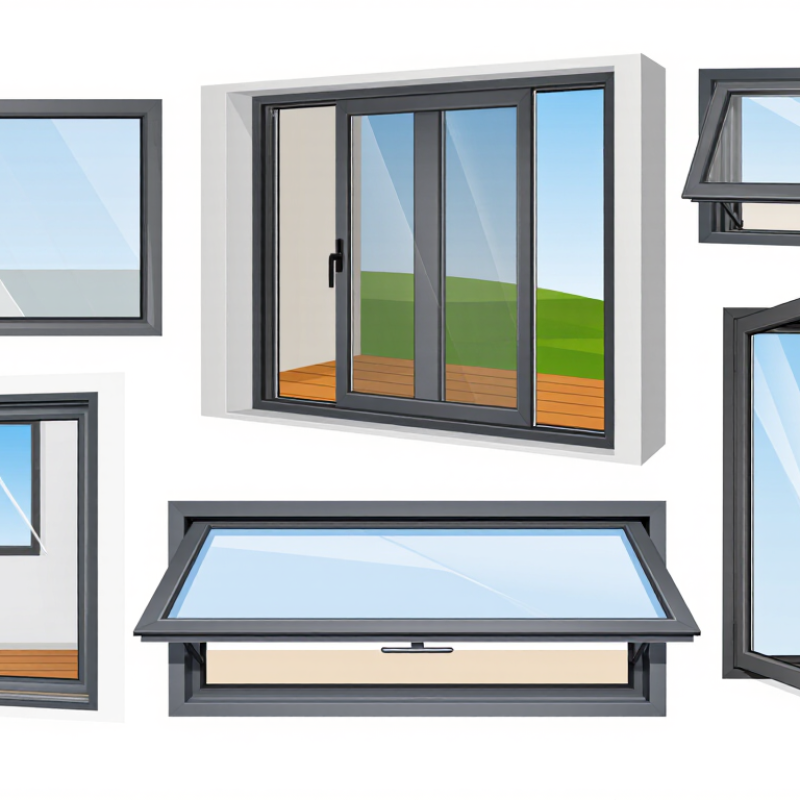
Aluminum windows are classified mainly by how their sashes move. Fixed windows do not open, making them useful where daylight and a clear view matter more than ventilation. Sliding windows move horizontally along a track; they suit wide openings but need clean tracks to glide smoothly. Single- and double-hung styles slide vertically. Double-hung sashes can open at both ends, which may help with airflow and cleaning.
Casement windows swing outward on side hinges, while awning windows hinge at the top and open outward. Their closing pressure can create a firm seal, but projecting sashes need clearance from walkways and nearby shrubs. Small detail. Check the swing. U.S. Department of Energy Energy Saver guidance estimates that heat gain and loss through windows account for about 25%–30% of residential heating and cooling energy use. That figure makes operation style worth considering alongside glazing and frame performance. NAFS, the North American Fenestration Standard, provides a common framework for evaluating window products; actual ratings still depend on the tested configuration. No opening style wins everywhere. A sheltered room may suit an outward-opening sash, while a narrow patio may make a slider more practical. I would still verify hardware access and cleaning reach before choosing.
| Window Type | Opening Style | Ventilation | Common Applications | Key Consideration |
|---|---|---|---|---|
| Fixed | Does not open; the glazed unit is secured in the frame. | None | Picture windows, high-level glazing, and areas where daylight or a view is desired without ventilation. | Usually offers a simple, airtight design, but a separate operable window is needed for fresh air. |
| Sliding | One or more sashes move horizontally along tracks. | Typically, up to about half of the frame opening, depending on the configuration. | Wide openings, patios, and locations where a sash swinging inward or outward would obstruct space. | Does not require swing clearance; tracks need periodic cleaning to help the sash move smoothly. |
| Casement | A sash is hinged at the side and swings outward or inward. | Large, adjustable opening. | Rooms needing strong ventilation and window positions where the sash can open without obstruction. | Can direct breezes into a room, but needs clearance for the swinging sash. |
| Awning | Hinged at the top; the sash swings outward from the bottom. | Adjustable opening beneath the projecting sash. | Bathrooms, kitchens, and other places where ventilation during light rain may be useful. | The projecting sash can help shield the opening from some rain, but it is not a substitute for weather protection in severe conditions. |
| Hopper | Hinged at the bottom; the sash usually tilts inward from the top. | Limited to moderate, depending on the opening angle. | Basements, utility rooms, and compact spaces. | Often suited to smaller openings; the inward-tilting sash needs interior clearance. |
| Tilt-and-Turn | Tilts inward from the top for limited ventilation or swings inward on side hinges for a wider opening. | Adjustable, from a small top opening to a wide opening. | Homes and buildings where flexible ventilation and access for cleaning are priorities. | Combines two opening functions in one sash; hardware and operation are more complex than a single-action window. |
| Folding | Multiple linked panels fold and stack to one or both sides. | Can create a wide, nearly full-frame opening. | Large openings connecting indoor rooms with patios, balconies, or outdoor areas. | Provides a broad opening, but requires space for the folded panels and correctly aligned tracks. |
| Pivot | The sash rotates around a central or offset horizontal or vertical pivot point. | Varies with the sash size, pivot position, and rotation angle. | Architectural designs, large glazed areas, and openings where a distinctive rotation is desired. | Needs suitable pivot hardware and clearance for the sash as it rotates. |
They are grouped by how their sashes move. Some stay fixed, while others slide, swing, fold, or pivot.
It provides daylight and a clear view without opening. It works where ventilation matters less, such as beside another operable window.
Sliding windows move sideways along a track and suit wide openings. Single- and double-hung windows move vertically. Double-hung sashes can open at both ends.
Casement sashes swing outward from side hinges. Awning sashes hinge at the top. Check the swing. Nearby shrubs or walkways may block them.
Folding panels stack to one side and can open a wide passage to a patio. The track needs clearance and regular cleaning. Grit matters.
They rotate around a central or offset point and can provide ventilation. Wind exposure and nearby furniture may limit their placement. Appearance alone is not enough.
It projects outward and can create a bright nook for reading or plants. Its panels admit light from different angles, but structural support needs careful planning.
Consider glazing, thermal breaks, seals, drainage, and local climate. Window heat gain and loss can account for about 25%–30% of home heating and cooling energy use. Ratings depend on the tested configuration, so I would verify the details rather than assume.
Aluminum windows are commonly classified by how they open, making it easier to compare their functions, ventilation, and suitability for different spaces. Fixed designs do not open and are chosen to bring in daylight and provide clear views, while casement windows swing outward or inward to offer adjustable ventilation. Sliding and lift-and-slide windows move horizontally, with lift-and-slide systems designed to make larger panels easier to operate.
Other styles provide distinct opening options. Awning windows hinge at the top, hopper windows hinge at the bottom, and tilt-and-turn windows can tilt for gentle airflow or swing open for wider access. Folding windows gather their panels to create a broad opening, while pivot windows rotate around a central axis. Bay designs project outward from a wall, adding interior space and a wider viewing angle. Choosing an Aluminum Window type depends on the desired appearance, available space, airflow, and how the room will be used.

 Apex Window & Door