Aluminium Bifold Doors can open a room to a garden, terrace, or balcony while keeping the threshold visually clear. Their performance depends on more than appearance. Frame design, panel weight, hardware quality, glazing options, and installation details all shape how smoothly a system works over time. A narrow frame may look elegant, but it still needs to feel stable when several panels are folded aside.
This guide to China’s top 10 aluminium bifold door manufacturers introduces companies for buyers, architects, and project teams to research. It considers practical factors such as product range, customization, production experience, quality control, and export support. Details matter. A polished catalogue cannot answer every question about tolerances, finishes, lead times, or replacement parts. Ask for current specifications, sample finishes, and project references before making a decision. Supplier capabilities can also vary by model and order size, so a name on a shortlist is only a starting point.
The companies featured here offer different approaches to design and manufacturing. Some may suit large residential openings; others may better match a compact renovation or a commercial project. There is no single best choice for every site. Compare technical documents carefully, and confirm that proposed configurations fit local project requirements. Even a well-made door can disappoint if measurements, drainage, or installation are overlooked. That part deserves a second look.
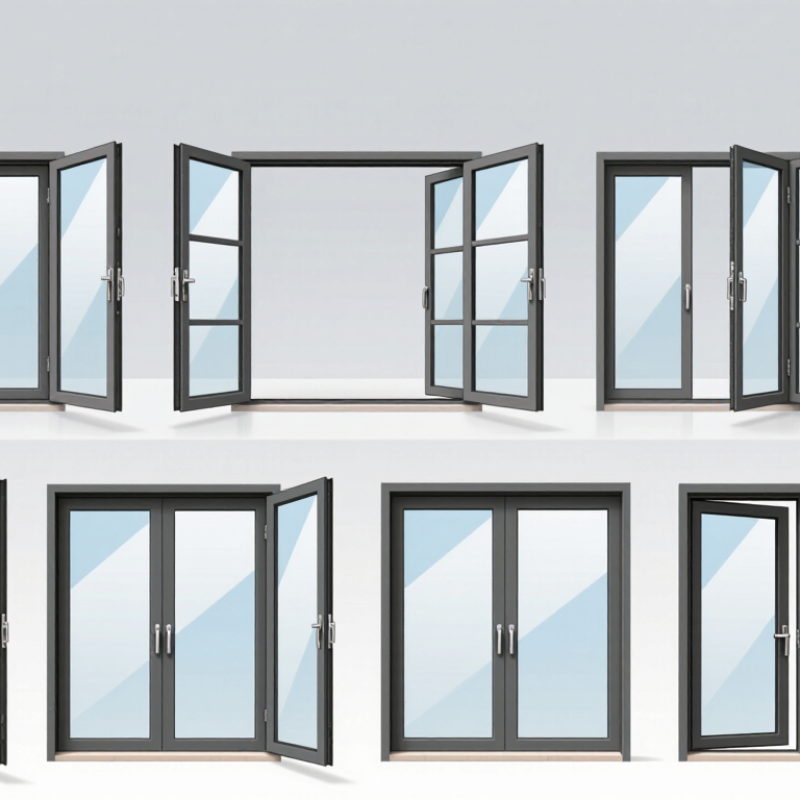
Aluminium bifold doors use hinged panels that fold and stack beside an opening. Unlike a sliding door, they can expose most of the doorway when fully open. That creates a broad connection between indoor and outdoor spaces. The slim frames admit daylight, though the actual glass area depends on panel size and frame design. Folded panels need room.
In a kitchen or dining area, these doors can open onto a patio for easier movement and ventilation. In a small room, however, the stacked panels may take up useful wall space. Not every layout suits them. Check the opening width, furniture positions, and where the panels will sit before choosing a configuration. A low threshold can improve access, but drainage and weather sealing still matter.
Performance depends on more than the aluminium frame. Glazing, gaskets, hardware, and careful installation all affect heat loss, noise, and resistance to drafts. Ask for documented thermal and water-performance details for the complete door system, not just the frame. Measure the opening accurately; older buildings are rarely perfectly square. It is easy to focus on appearance and overlook maintenance: tracks can collect grit, so they need occasional cleaning.
Aluminium bifold doors use hinged panels that fold to create a wide opening, making them a popular option for patios, garden access and connecting indoor and outdoor spaces.
The chart shows example widths with exact metric-to-imperial conversions rounded to two decimal places. These are reference examples, not standard sizes or product specifications; suitable dimensions depend on the building and door system.
Choosing among aluminium bifold door manufacturers in China requires more than comparing quoted prices. Ask each supplier for the alloy grade, profile dimensions, wall thickness, and thermal-break material. A reliable quotation should also specify glazing options, hardware, surface finish, and included accessories. Ask for evidence. Request test reports and confirm which product configuration they cover; a report for a different frame is not enough.
Review production details, not just showroom images. Ask for recent photos of welding, corner joints, drainage channels, and finished doors. Check whether the panels move smoothly and align evenly when closed. Small details matter. A sample can reveal finish quality, but it may not represent routine production, so ask how batches are inspected. If possible, review a factory inspection or speak with a recent buyer. References should describe projects of similar size and climate.
Discuss installation clearances, packaging, lead times, replacement parts, and warranty terms before placing an order. Request shop drawings showing opening dimensions and stacking direction. Compare the manufacturer’s answers with the documents, not just sales calls. I would still leave room for uncertainty: a neat sample cannot predict every shipment, and communication may change once production begins. Agree on written inspection criteria and photograph any issues before dispatch.
China’s aluminium bifold-door sector ranges from large, vertically integrated plants to specialist fabricators serving custom projects. These ten manufacturer profiles compare extrusion capability, thermal-break design, hardware integration, testing, and export experience. A factory visit can reveal details brochures miss: profile-wall consistency, clean drainage slots, and smooth movement across a full-size sample. Small details matter.
The International Aluminium Institute’s Aluminium Sector Greenhouse Gas Pathways to 2050 report estimated that aluminium production emitted about 1.1 billion tonnes of CO₂ equivalent in 2018, roughly 2% of global human-caused emissions. That context makes recycled-content disclosure and production-energy data useful comparison points, though neither proves a door’s performance. Ask each supplier for test results covering air leakage, water penetration, and wind resistance, plus the tested configuration. A strong result for one panel size may not apply to a wider opening. Claims need checking. Site installation, drainage, and maintenance also affect service life, and buyers sometimes underweight these practical factors.
Comparing China’s top 10 aluminium bifold door manufacturers is most useful when product range is assessed alongside customization and production capability. Some suppliers focus on slim frames for residential patios; others offer heavier profiles suited to wider commercial openings. Check available panel configurations, maximum door sizes, threshold options, glazing thickness, and hardware choices. These details affect daylight, access, and day-to-day operation. A broad catalog is not always a sign of greater flexibility.
Ask for samples. A corner cutaway can reveal wall thickness, thermal-break design, and finish quality more clearly than a brochure. Request drawings that show drainage paths, reinforcement, and locking points. Then confirm which dimensions and colors are standard, and which require new tooling or longer lead times. Specifications are not always presented consistently, so direct comparison can be awkward. That matters.
Manufacturing capacity deserves equal attention. Ask how orders are checked, how finish batches are matched, and whether assembled units receive operational testing before packing. Clarify expected output, delivery schedules, protective packaging, and how production changes are communicated. A factory may accept a highly customized design but lack a repeatable process for it. That is an easy detail to miss. Compare documented capabilities, not promises alone, and allow room for questions when technical information feels incomplete.
| Profile | Typical Product Range | Configuration Options | Customization | Thermal and Glazing Options | Manufacturing Capabilities to Check | Best-Fit Project Type |
|---|---|---|---|---|---|---|
| Profile 01 | Residential folding door systems | Multiple-panel layouts; inward or outward opening, subject to system design | Made-to-order opening sizes, colors, and hardware finishes | Thermally broken and non-thermal options may be available; glazing depends on frame compatibility | Ask for profile drawings, hardware details, and a sample production inspection | Homes, patios, and garden openings |
| Profile 02 | Thermal-break folding door systems | Common multi-panel arrangements with a traffic-door option on selected designs | Frame colors, glass specification, and panel arrangement by project | Insulating-glass options; request system-specific thermal data | Verify thermal-performance reports and compatibility of glass, seals, and hardware | Energy-conscious residential construction |
| Profile 03 | Large-opening folding door systems | Wide openings assembled from multiple folding panels, subject to engineering limits | Project-specific panel widths, thresholds, and stacking direction | Glass weight and thickness must match the approved panel and hardware limits | Request maximum panel dimensions, load calculations, and installation details | Open-plan living areas and hospitality spaces |
| Profile 04 | Slim-sightline aluminium folding doors | Configurations depend on the structural and weather-performance requirements | Color, handle style, and threshold selection by specification | Ask whether the selected glazing build-up is supported by the chosen profile | Inspect corner joints, drainage paths, seals, and finish samples | Projects prioritizing a larger glazed appearance |
| Profile 05 | Commercial-grade folding door systems | Multi-panel systems with traffic-door or access-control preparation on selected models | Hardware, access requirements, and finishes coordinated with project schedules | Glazing and safety-glass requirements depend on local codes and intended use | Check cycle testing, hardware specifications, and applicable compliance documents | Retail, restaurants, and commercial interiors |
| Profile 06 | Folding doors for coastal or exposed locations | Layout and opening direction are selected to suit site exposure and drainage design | Durable finish and hardware options should be confirmed for the site environment | Glass specification should reflect applicable wind-load and safety requirements | Request finish specifications, corrosion-resistance information, and relevant test evidence | Coastal homes and weather-exposed façades |
| Profile 07 | Folding doors with low-threshold options | Threshold choice depends on accessibility, water management, and installation conditions | Threshold details, drainage, and floor interfaces coordinated to drawings | Performance depends on the complete installed assembly, not the threshold alone | Review water-management details and confirm the tested configuration matches the order | Accessible transitions and indoor-outdoor spaces |
| Profile 08 | Standard and thermally improved folding door ranges | Panel layout selected from the available system and project opening dimensions | Common options include custom dimensions, glazing, colors, and handles | Request U-value data for the complete door in the specified size and glass build-up | Confirm production tolerances, quality checks, packaging, and export documentation | Residential projects with varied budget and performance needs |
| Profile 09 | Project-engineered aluminium folding doors | Layouts developed around architectural drawings and site conditions | Potentially includes non-standard colors, hardware, and project-specific detailing | Thermal, acoustic, and safety requirements need project-specific confirmation | Evaluate drawing support, engineering review, and sample or prototype approval processes | Custom residential and commercial developments |
| Profile 10 | Export-oriented aluminium folding door systems | Configurations and documentation prepared for the destination market by agreement | Finish, glass, packaging, and hardware specifications confirmed in the order documents | Performance requirements and certifications vary by destination and project | Check traceability, inspection records, packaging method, and delivery terms | Overseas projects requiring coordinated supply and documentation |
China’s aluminium bifold door manufacturers should be assessed through documented performance, not catalogue claims. Ask for test reports covering air leakage, water penetration, wind resistance, and thermal performance. Reports should identify the tested configuration, including frame size, glazing, seals, and hardware. Details matter.
Quality checks should also follow the production process. Review incoming alloy records, coating thickness readings, corner-joint samples, and inspection logs. A factory visit can reveal how operators protect finished profiles from scratches and keep batches traceable. Request evidence for the specific product line; a general company certificate may not cover every door system. Some paperwork is polished, while routine records can be uneven. That gap deserves questions, not assumptions.
Export readiness depends on the destination market and the buyer’s specifications. Confirm that test methods and certifications are accepted there, and verify validity with the issuing body when possible. Discuss packaging dimensions, moisture protection, spare rollers, installation instructions, and replacement-part lead times. Ask for sample shipping documents and a clear process for handling damaged goods. A supplier may ship regularly, yet still need support with local labeling or unusual project documentation. Check before production starts. This is less glamorous than a showroom visit, but often more useful.
Check panel layouts, maximum sizes, threshold options, glazing thickness, and hardware. A wide catalog does not always mean flexible production.
Request a corner sample. It can show wall thickness, thermal-break design, and finish quality more clearly than a brochure.
Ask for drawings that show drainage paths, reinforcement, and locking points. Confirm which colors and dimensions are standard.
Ask how orders are checked, finish batches matched, and assembled doors tested before packing. Promises alone are not enough.
Request reports for air leakage, water penetration, wind resistance, and thermal performance. Check the tested frame size, glazing, seals, and hardware.
Ask for alloy records, coating readings, corner-joint samples, and inspection logs. Details matter.
Not always. Check that reports and certificates cover the specific door system, and verify acceptance in the destination market.
Discuss packaging size, moisture protection, spare rollers, installation instructions, and replacement-part lead times. Ask how damaged goods are handled.
Confirm tooling needs, production timing, and how design changes are communicated. Comparisons can still feel awkward when specifications differ.
This article explores the practical features and common applications of Aluminium Bifold Doors, including how their folding design can connect indoor and outdoor spaces while making efficient use of available room. It also outlines key factors to consider when evaluating manufacturers in China, such as product range, material and construction options, customization services, production capacity, and experience with different project requirements.
The article profiles ten leading manufacturers without focusing on brand promotion and compares their capabilities to help readers understand how suppliers may differ. It also explains how to assess quality controls, relevant certifications, and export readiness when choosing a manufacturer. Together, these points provide a clear framework for comparing potential suppliers and identifying a suitable partner for residential or commercial projects.

Apex Window & Door