Choosing a dependable Aluminum Door With Window starts with more than a polished catalogue image. Buyers comparing manufacturers in China should examine frame design, glass options, hardware, finish quality, and the factory’s ability to document specifications. A slim aluminum profile can bring daylight into a hallway or kitchen, while a well-fitted seal helps limit drafts and rain. Details matter. Ask how the manufacturer checks corner joints, drainage paths, and coating consistency. Request drawings and sample finishes before confirming an order. These steps make comparisons clearer, though they cannot replace careful installation.
Building-science expert Joseph Lstiburek’s work emphasizes managing water, air, and heat at the building enclosure. That principle applies to a glazed door, where a frame, glass unit, seals, and installation must work together. A low price may look attractive, but it means little if the dimensions, glass build-up, or hardware differ from the approved specification. Check product test information and clarify what is included in the quote. Also ask how custom sizes are handled and what support is available after delivery. Some buyers focus heavily on appearance; that is understandable, but it can leave practical questions unanswered. Even a good product can disappoint when site measurements are rushed. This guide introduces China’s aluminum door manufacturers and the points worth checking before choosing one. The small details count. And sometimes, the first quote is not the whole story.
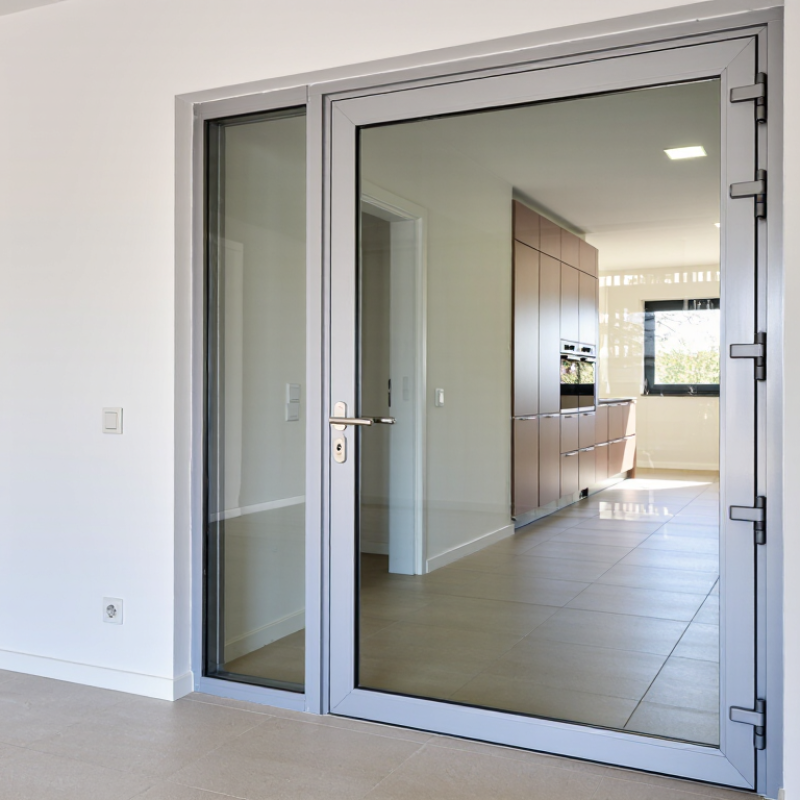
Overview of Aluminum Doors with Windows in China
China’s aluminum doors with windows are made for homes, offices, and commercial projects. Common options include sliding doors, hinged doors, and window-door combinations. Buyers can specify frame depth, glazing, finish, and opening direction. In practical terms, a sample corner joint often reveals more than a polished product photo.
Thermal performance deserves close attention. The International Energy Agency’s 2023 Global Status Report for Buildings and Construction states that buildings used 30% of global final energy in 2022 and produced 26% of energy-related emissions. Thermally broken frames and suitable glazing can help reduce heat transfer, but results depend on the full assembly. Small gaps matter. Installation quality, seals, drainage, and hardware all affect comfort and durability.
For China-made products, compare documented test results, not just profile thickness. Ask how the unit performs under local wind, rain, and temperature conditions. A thicker frame is not automatically a better door. Even a well-specified product can disappoint if site measurements or installation are poor, an easy detail to underestimate.
| Product Type | Typical Configuration | Glazing Options | Common Applications | Key Selection Considerations |
|---|---|---|---|---|
| Aluminum Hinged Door with Glass Panel | One or more hinged leaves with a glazed section; available with inward- or outward-opening configurations. | Single glazing, insulated glass units, or safety glass, depending on the location and design. | Residential entrances, balconies, patios, and commercial access points. | Check opening direction, frame and hardware compatibility, weather seals, and safety-glass requirements for the intended location. |
| Aluminum Sliding Door with Glass | Two or more panels move horizontally along tracks; some systems include fixed glazed panels. | Clear, tinted, coated, or insulated glazing can be specified according to daylight, privacy, and thermal requirements. | Balconies, terraces, garden access, and openings where a swinging leaf would use valuable floor space. | Review track drainage, roller capacity, sealing design, panel size, and space needed for the sliding panels. |
| Aluminum Folding Door with Glass | Multiple connected panels fold and stack to one or both sides of the opening. | Glazing choices depend on panel dimensions, system design, and required safety performance. | Wide patio openings, hospitality spaces, and indoor-outdoor connections. | Confirm the supported panel configuration, threshold details, folding clearance, and hardware maintenance access. |
| Thermally Broken Aluminum Door with Window | Aluminum profiles use a thermal barrier to reduce direct heat transfer through the frame. | Often paired with double glazing; the complete door's performance depends on both frame and glass. | Homes and buildings where improved thermal comfort is a design priority. | Request tested whole-door performance data for the specified size and glazing; profile descriptions alone do not establish overall performance. |
| Aluminum Door with Laminated Glass | Door leaf or glazed panel uses laminated glass, made by bonding glass layers with an interlayer. | Laminated glass may be combined with other glass types in an insulated glass unit. | Locations where retaining glass fragments after breakage is an important consideration. | Specify glass composition and thickness based on applicable safety requirements and project conditions. |
| Aluminum Door with Tempered Glass | Glazed door or panel incorporates heat-treated safety glass. | Clear, tinted, or coated tempered glass; insulated configurations are also possible. | Residential and commercial doors where safety glazing is specified. | Tempered glass cannot generally be cut or drilled after heat treatment; confirm final dimensions and hardware cut-outs before production. |
| Aluminum Door with Insulated Glass Unit | Two or more panes are separated by a sealed cavity within one glazing unit. | Glass and cavity specifications vary; coatings and gas fills may be available depending on the system. | Exterior doors requiring a glazing solution designed for thermal or condensation considerations. | Check the complete unit specification, edge-seal details, frame compatibility, and project-specific performance requirements. |
Note: Configurations and performance vary by product system, glazing, dimensions, installation, and project requirements. Request current technical documentation and applicable test reports for the exact specification.
Sliding doors move along a track and need little swing space. Keep the track clean.
They help reduce heat transfer through the frame. Glass, seals, drainage, and installation also affect results. Small gaps matter.
No. Compare documented performance under local wind, rain, and temperature conditions. Thickness alone tells little.
Double glazing can improve insulation and soften outdoor noise. Low-emissivity coatings can limit solar heat. Frosted glass adds privacy.
Check the corner joints, frame alignment, seals, and hardware movement. Operate the door by hand. Details get missed.
Poor measurements or uneven fitting can cause rubbing, gaps, or leaks. A good product can still disappoint.
They open wide, but stacked panels need room and careful alignment. Measure the space first. Light feels different.
Ask about dimensional checks, finish inspection, hardware movement, and sample air or water tests. Results depend on the full assembly, not just the frame.
China’s aluminum door industry offers a wide range of designs that combine natural light, ventilation, durability, and modern style. An Aluminum Door With Window may feature a sliding, hinged, folding, or fixed-panel configuration, with options for different glazing, frame finishes, insulation, and security features. The best choice depends on the building’s layout, climate, intended use, and design requirements.
Chinese manufacturers typically develop products through material selection, frame fabrication, glass installation, surface finishing, and quality checks. When evaluating suppliers, buyers can consider production capacity, customization options, material specifications, workmanship, communication, and after-sales support. The industry continues to evolve toward energy-efficient glazing, improved thermal performance, adaptable designs, and more consistent production. Understanding these factors helps buyers compare manufacturers and select a solution suited to both functional needs and architectural preferences.

 Apex Window & Door