Choosing the right entrance affects comfort, security, and the character of a home. An Aluminium Door With Window can bring these qualities together without making the space feel heavy. Its slim frame allows more daylight to enter hallways, kitchens, and enclosed porches. In the morning, sunlight can spread across tiled floors through a clear or frosted glass panel.
Aluminium is valued for its strength, corrosion resistance, and relatively low maintenance requirements. Modern powder-coated finishes can retain their appearance through changing weather, although quality still depends on proper preparation and installation. A well-fitted door should open smoothly, close firmly, and maintain a reliable seal around the frame. Professional installers usually check the wall opening, drainage details, glazing type, and hardware before completion. These small checks matter more than attractive photographs suggest.
Practical design choices also deserve attention. Double glazing may improve thermal comfort, while laminated or toughened glass can provide added safety for suitable applications. However, no product suits every building. A dark finish may absorb more heat, and a large window can reduce privacy without blinds or textured glass. That part is easy to overlook.
The best decision balances appearance, climate, daily use, and budget. It should also consider local building requirements and the manufacturer’s technical guidance. Aluminium doors are not maintenance-free. Hinges, locks, seals, and drainage channels still need occasional inspection. With honest product comparisons and experienced fitting, an Aluminium Door With Window can become a bright, durable, and practical feature rather than a costly decoration.
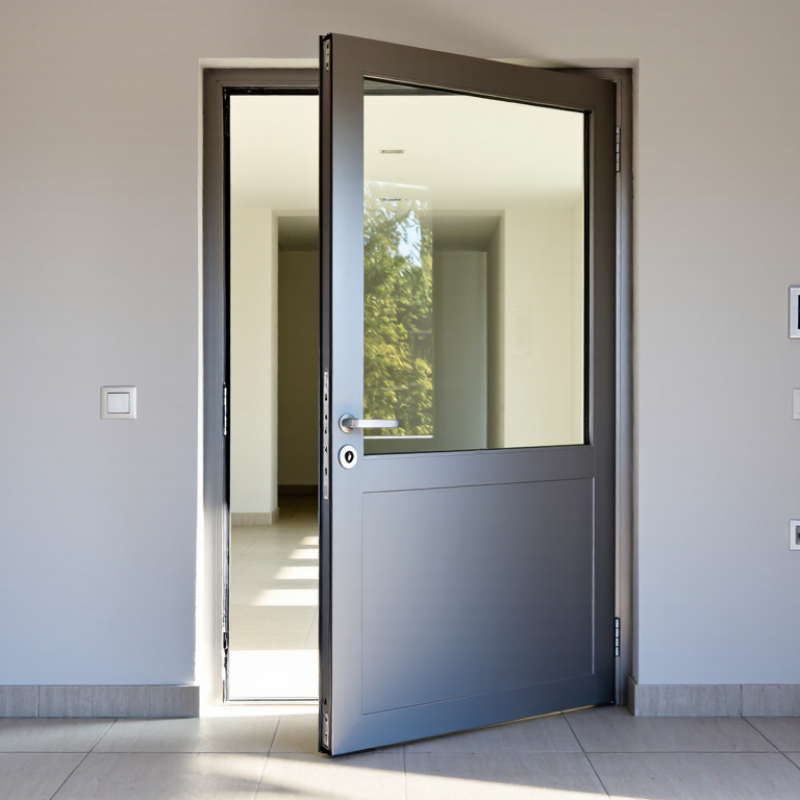
An aluminium door with a window combines a rigid metal frame with a glazed opening. The frame usually uses extruded aluminium sections. These sections can be slim, straight, and highly resistant to moisture. During a project inspection, I look for square corners, even joints, and clear drainage paths. Small details matter. A frame that flexes may cause difficult locking and uneven seals. Aluminium is strong, but strength alone does not guarantee comfort.
The glass controls much of the door’s daylight, insulation, and acoustic performance. Double glazing generally performs better than single glazing in occupied rooms. Low-emissivity coatings can reduce heat transfer, while laminated glass may improve safety and noise control. The correct choice depends on climate, orientation, and room use. A sunny west-facing entrance needs different glass from a shaded hallway. Ask for declared U-values, not vague claims. Glass should also suit the door’s size and opening movement.
A thermal break separates the inner and outer aluminium profiles with a low-conductivity insulating strip. This reduces the path for heat to travel through the frame. It can also limit interior condensation when humidity and temperature are properly managed. I have seen attractive doors underperform because installation left gaps around the frame. The sealant line, threshold, and surrounding wall are part of the system. Do not overlook hardware. Poor hinges or weak rollers can undermine a well-designed door. My first assessment is rarely perfect; site measurements sometimes expose assumptions. That is useful, not embarrassing.
An aluminium door with a window can bring daylight, ventilation, and a clean architectural feel. Its thermal performance depends heavily on the U-value. An excellent target.
However, the number needs context. U-value measures heat transfer through the door assembly, including the frame, glazing, and seals. Lower values generally mean better insulation. A figure near 1.0 W/m²K indicates strong thermal resistance for a glazed aluminium door. It can help keep a hallway warmer and reduce cold surfaces around the glass. Yet, manufacturers may quote centre-glass performance instead of the complete door. Ask for the whole-door U-value, verified under recognized testing conditions.
On a cold morning, a well-designed door should feel less chilly near its frame. That practical detail matters. Thermal breaks within aluminium profiles, warm-edge spacers, and low-emissivity glass can reduce heat loss. Installation matters just as much. Small gaps around the frame may undermine an impressive laboratory result. Professional fitting, accurate leveling, and continuous weather seals are essential.
A reliable assessment should also consider condensation risk, air leakage, and solar gain. Standards such as EN ISO 10077 can support clearer comparisons. Still, a U-value is not a complete promise. Real homes have different wind exposure, indoor humidity, and heating habits. It is easy to overstate one figure. Careful specification and honest installation records provide better evidence than a headline number alone.
An aluminium door with a window can bring daylight, slim sightlines, and a strong modern frame. Its thermal performance depends on more than the metal itself. A quality aluminium system needs a thermal break to reduce heat transfer through the frame.
Double or triple glazing achieves low U-values through several combined details. Two panes create one insulating cavity. Three panes create two. These spaces commonly contain argon gas, which transfers less heat than ordinary air. Low-emissivity coatings also reflect indoor warmth back into the room. With suitable glass, spacers, and seals, double glazing may reach a centre-pane U-value near 1.1 W/m²K. Triple glazing can approach 0.7 W/m²K.
The figure needs careful checking. Is it for the glass, the frame, or the complete door? Whole-door results usually include the aluminium frame and may be higher. Door size, opening design, spacer material, and installation quality also affect performance. A badly sealed edge can waste the benefit of expensive glass.
In practical inspections, I look for continuous seals and a firm closing action. Cold air near the threshold is an immediate warning. Triple glazing is not automatically better for every home. It can add weight, cost, and solar-control issues. A warmer pane may also expose weaknesses elsewhere, such as poor ventilation or an uninsulated wall. The best choice follows the building, orientation, and local climate—not a single impressive number.
| Glazing or Door Configuration | Glass Make-Up | Low-Emissivity Coating | Gas Fill | Typical Centre-of-Glass Ug | Typical Complete Door U-Value | Thermal Performance Explanation |
|---|---|---|---|---|---|---|
| Single glazing | One pane of glass | None | Air | Approximately 5.7 W/m²K | Approximately 5.5–6.5 W/m²K | Provides limited insulation and allows substantially more heat transfer than insulated double or triple glazing. |
| Basic double glazing | Two panes with an insulated cavity | Usually clear glass or basic low-e glass | Air or argon | Approximately 2.7–1.6 W/m²K | Approximately 1.8–2.5 W/m²K | The sealed cavity reduces conduction and convection. Performance varies with cavity width, glass type, spacer and frame design. |
| High-performance double glazing | Two panes with an optimised insulated cavity | Soft-coat low-e glass on the cavity-facing surface | Argon | Approximately 1.0–1.1 W/m²K | Approximately 1.3–1.8 W/m²K | Low-e glass reflects long-wave heat back into the room, while argon reduces heat transfer through the cavity. This is why double glazing can achieve a Ug value near 1.1 W/m²K. |
| Standard triple glazing | Three panes with two insulated cavities | One or two low-e coatings | Argon | Approximately 0.7–0.9 W/m²K | Approximately 1.0–1.5 W/m²K | The additional pane and cavity create another insulating layer. The final door value also depends on the frame, edge spacer and glass-to-frame ratio. |
| High-performance triple glazing | Three panes with two carefully sized insulated cavities | High-performance low-e coatings | Argon; sometimes krypton for specialist designs | Approximately 0.5–0.7 W/m²K | Approximately 0.8–1.2 W/m²K | A centre-of-glass Ug value around 0.7 W/m²K is achievable when low-e coatings, gas-filled cavities and warm-edge spacers are correctly combined. |
| Thermally broken aluminium door with double glazing | High-performance double-glazed sealed unit | Low-e coating | Argon | Approximately 1.0–1.1 W/m²K | Approximately 1.3–1.8 W/m²K | A thermal break separates the inner and outer aluminium sections, reducing heat flow through the frame while maintaining aluminium’s strength and slim appearance. |
| Thermally broken aluminium door with triple glazing | High-performance triple-glazed sealed unit | Multiple low-e coatings | Argon | Approximately 0.6–0.7 W/m²K | Approximately 0.8–1.2 W/m²K | Combines a thermally improved aluminium frame with three panes, two insulating cavities and low-e coatings for enhanced energy efficiency and indoor comfort. |
Notes: Ug describes the centre-of-glass thermal transmittance, while the complete door U-value includes the glass, frame, edge spacer, seals and panel areas. Lower U-values indicate better insulation. The figures shown are typical indicative ranges; certified performance depends on the exact dimensions, materials, cavity width, spacer, hardware and test method.
Aluminium frames can support 30–40 years of structural service when design, installation, and maintenance work together. The metal offers high strength with relatively low weight. This helps large glazed doors stay stable without bulky profiles. In well-installed projects, the frame resists daily opening, closing, wind pressure, and temperature changes.
The metal offers high strength with relatively low weight.
Quality aluminium sections should have suitable wall thickness and properly engineered joints. Powder coating or anodising protects the surface from moisture and ultraviolet exposure. Thermal breaks also reduce heat transfer through the frame. They do not make the door completely maintenance-free. Drainage paths must remain open, and seals need inspection around the glass edges.
A blocked drainage hole can leave water inside the lower track. Loose fixings may allow movement, causing rubbing or uneven gaps. Regular cleaning with mild soap helps remove grit and salt deposits, especially near coastal areas. Harsh chemicals can damage protective finishes.
Thirty to forty years is a realistic service range, not an automatic promise. Installation quality can shorten it. I have seen strong frames perform poorly because the surrounding wall moved or the threshold was fitted without proper drainage. That detail deserves more attention. A durable aluminium door depends on the whole assembly, not the frame alone.
An aluminium door with a window can bring daylight into a hallway while keeping the frame slim and durable. Buyers should check tested performance, not just attractive photographs. Look for EN 14351-1 certification where applicable, or the relevant standard in your region. Safety glass should also meet recognised requirements, such as EN 12600 or local building codes. Toughened glass resists impact, while laminated glass can remain bonded after breakage.
Air-tightness deserves careful attention. Under EN 12207, air permeability ranges from Class 1 to Class 4, with Class 4 offering the strongest tested resistance. Some projects use ASTM E283 instead, so compare results only within the same testing system. Ask for the complete test report, including door size, pressure level, and installation method. A high rating from a small laboratory sample may not represent a poorly fitted door.
Check the seals closely. They should sit evenly around the sash, without gaps at the corners. The threshold also needs proper drainage and a continuous seal. In real homes, installation often causes more leakage than the frame itself. I would not treat a test sheet as a guarantee. Wall movement, worn gaskets, and incorrect adjustment can reduce performance. Request evidence from an independent laboratory, confirm the installer’s experience, and check local requirements for wind, water, emergency escape, and security. Small details matter.
It combines a rigid aluminium frame with a glazed opening. The frame is usually made from extruded sections. Aluminium resists moisture and stays relatively slim. Check square corners, even joints, and clear drainage paths.
Glass controls daylight, insulation, and sound reduction. Double glazing usually performs better than single glazing indoors. Low-emissivity coatings can reduce heat transfer. Laminated glass may improve safety and noise control.
A thermal break separates inner and outer aluminium profiles. An insulating strip slows heat movement through the frame. It may also reduce condensation. However, humidity and temperature still matter.
Yes, suitable double glazing can approach 1.1 W/m²K at the centre pane. Two panes form one insulating cavity. Argon gas, low-emissivity coatings, spacers, and seals all contribute. Check what the number measures.
It can, under suitable conditions. Three panes create two insulating cavities. Triple glazing may approach 0.7 W/m²K at the centre pane. Whole-door performance may be lower.
Not necessarily. It may describe only the glass. Whole-door results include the frame, edges, and opening design. Ask for declared values for the complete door. A vague figure is not enough.
No. It can add weight and cost. It may also create solar-control problems. A shaded hallway differs from a sunny west-facing entrance. The building, climate, and orientation should guide the choice.
Look for continuous seals around the frame. Inspect the threshold and surrounding wall. Small gaps can waste expensive glazing benefits. Cold air near the threshold is a clear warning. My first assessment may be wrong, so site measurements deserve another look.
Yes. Weak hinges or rollers can affect closing pressure and seals. A flexing frame may cause difficult locking. Check the closing action, joints, and drainage. Attractive appearance alone proves little.
An Aluminium Door With Window combines a strong, lightweight aluminium frame with one or more glass panels, creating a practical solution for daylight, ventilation, and access. Its performance depends on the frame design, glazing type, seals, and thermal breaks, which reduce heat transfer through the metal. A U-value near 1.0 W/m²K generally indicates good insulation, while double glazing can achieve around 1.1 W/m²K and well-designed triple glazing may reach approximately 0.7 W/m²K, depending on glass coatings, gas filling, spacer design, and installation quality.
Aluminium frames are also valued for dimensional stability, corrosion resistance, and long-term structural durability, with properly specified and maintained systems often designed to serve for 30–40 years. Buyers should review independently verified safety performance, suitable impact resistance, secure locking arrangements, and air-tightness classifications. Checking the complete door specification, including glass, frame, seals, drainage, and installation details, helps ensure reliable thermal efficiency, weather protection, security, and long-term operation.
Apex Window & Door