Sourcing Aluminium Doors And Windows globally is no longer a simple price comparison. Buyers must evaluate profiles, thermal breaks, glass specifications, finishes, hardware, packaging, and delivery reliability. A lower quotation can hide thinner walls, inconsistent powder coating, or weak quality control. The details matter.
Industry data shows why this category deserves careful attention. The International Aluminium Institute reports that global primary aluminium production exceeded 70 million tonnes in 2023, reflecting the material’s central role in construction and manufacturing. Its aluminium demand scenarios also indicate strong long-term growth, supported by urbanisation, infrastructure investment, and building renovation. However, aluminium supply is not automatically sustainable. The International Energy Agency highlights substantial differences in emissions between production routes, especially where electricity comes from coal. Buyers should therefore request product-level environmental information, recycled content evidence, and credible chain-of-custody documentation.
Logistics adds another layer. The World Bank’s Logistics Performance Index 2023 shows wide differences in customs efficiency, shipment tracking, and delivery performance between markets. That gap can turn a factory-ready order into a costly delay. Country selection matters. So do container loading plans, moisture protection, replacement policies, and inspection timing. Reports from Grand View Research and other market analysts suggest continued expansion in aluminium doors and windows, but market forecasts vary by definition and region. That is worth remembering. Forecasts are guides, not guarantees.
This guide examines supplier screening, technical documentation, sample approval, factory audits, Incoterms, and landed-cost analysis. It also questions common assumptions, including the belief that the cheapest ex-works offer is the best global sourcing decision. Often, it is not.
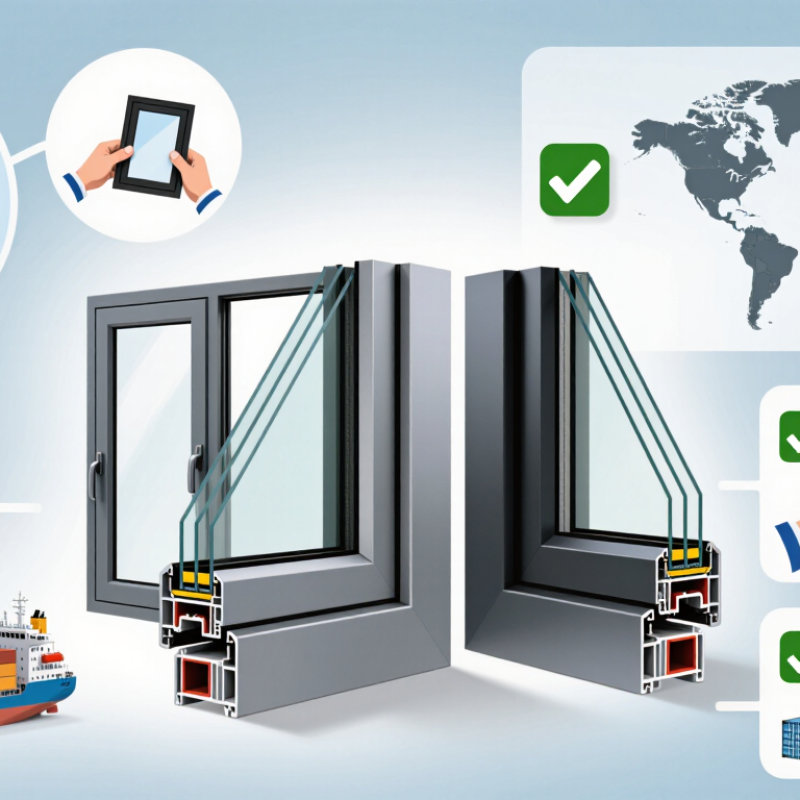
Before contacting overseas suppliers, define the project in measurable terms. Record opening sizes, frame depth, glass type, thermal targets, acoustic needs, and finish requirements. Include drawings with tolerances, not rough sketches. A balcony door in a coastal city faces different demands from an office window in a dry climate. Salt exposure, wind pressure, rain, and sunlight should shape the specification.
Set sourcing goals beyond the lowest unit price. Compare total cost, including tooling, packaging, freight, duties, installation, and possible rework. Establish an acceptable lead time and a realistic inspection schedule. Ask suppliers for test reports, material details, production capacity, and sample approval procedures. I have seen projects lose time because “standard size” meant different dimensions to each party. That mistake is avoidable, but not always avoided. Define communication channels and document every revision.
Tips: Create a one-page requirement sheet. Mark critical dimensions clearly. Request a physical sample before mass production. Keep a small contingency budget for design changes or damaged goods. Review climate data for the installation site. If the project team cannot agree on priorities, pause supplier comparisons. A cheaper quotation may hide weaker hardware, longer delivery, or higher installation labor. Your sourcing goal should balance performance, risk, schedule, and cost—not price alone.
| Planning Dimension | Project Requirement | Recommended Target or Reference Data | Global Sourcing Goal | Verification Method |
|---|---|---|---|---|
| Project Location | Climate and exposure conditions | Record climate zone, annual temperature range, rainfall, wind exposure, coastal salt exposure and altitude before selecting profiles and finishes. | Shortlist suppliers that can demonstrate previous production for comparable climate and exposure conditions. | Site data |
| Building Function | Residential, commercial, hospitality or institutional use | Define occupancy, opening frequency, security level, acoustic expectations, cleaning requirements and expected service life. | Match product durability and hardware duty rating to actual operating conditions rather than purchasing only on unit price. | Brief review |
| Performance | Air permeability | Specify the required air-infiltration class and test pressure under the applicable regional standard. EN 12207 and ASTM E283 are commonly used reference methods. | Compare tested system performance using the same test method and pressure basis. | Test report |
| Performance | Watertightness | Set a project-specific water-pressure requirement based on building height, façade exposure, local rainfall and wind-driven rain risk. EN 12208 and ASTM E water tests are common references. | Reject products supported only by nominal claims without a documented water test for the proposed configuration. | Test report |
| Performance | Wind resistance | Calculate design wind pressure from local code, building height, terrain category, façade zone and opening size. EN 12210 and ASTM E330 are widely used references. | Require structural calculations or test evidence for the exact frame, glass and reinforcement combination. | Engineering review |
| Thermal | U-value and solar control | Define whole-window U-value, glazing specification, solar heat-gain target and visible-light requirement according to the energy code and building orientation. ISO 10077-1 is a common calculation reference. | Evaluate complete window performance, including frame, spacer, glass and installation details, rather than centre-of-glass values alone. | Calculation |
| Acoustics | Sound insulation | Specify the required weighted sound-reduction performance in decibels based on traffic, airport, industrial or residential noise exposure. | Request laboratory acoustic results for the complete window or door assembly, including seals and glazing configuration. | Lab report |
| Safety | Glass and opening safety | Define locations requiring safety glass, laminated glass, restricted openings, fall protection, child safety or impact resistance in accordance with the applicable building code. | Confirm that glass type, thickness, edge treatment and fixing method are documented before mass production. | Shop drawings |
| Security | Resistance to forced entry | Specify lock points, cylinder or handle requirements, laminated glazing where applicable and the required security class under the relevant local standard. | Compare tested security configurations instead of comparing hardware components in isolation. | Security test |
| Materials | Aluminium alloy and profile construction | Define alloy designation, temper, profile depth, wall thickness, thermal-break arrangement, reinforcement and allowable dimensional tolerances. | Use material certificates and approved profile drawings to control substitution risk across different manufacturing countries. | Certificates |
| Finishes | Surface treatment and colour consistency | Select powder coating, anodizing or another approved finish; define colour tolerance, gloss level, pretreatment, coating thickness and corrosion-resistance expectations. | Require finish samples and production-panel approval before ordering the full project quantity. | Sample approval |
| Glazing | Glass build-up and edge compatibility | Document glass thickness, heat treatment, coating position, spacer type, gas fill where specified, sealant compatibility and maximum panel dimensions. | Ensure the proposed glazing is compatible with frame drainage, pressure plates, gaskets and transport limitations. | Glass schedule |
| Compliance | Applicable standards and certifications | Create a country-by-country compliance matrix. Common references include EN 14351-1 for windows and external pedestrian doorsets, ASTM E standards for performance testing, and local energy and safety codes. | Select suppliers able to provide traceable documentation accepted by the project authority and importer. | Compliance matrix |
| Dimensions | Opening sizes and modular coordination | Freeze opening schedules, frame dimensions, reveal conditions, sill details, tolerances and interface requirements before quotation comparison. | Reduce rework, packaging variation and site fitting costs by using standardized module sizes where practical. | Approved schedule |
| Installation | Interface with structure and weather barrier | Define fixing points, anchors, packers, membranes, flashings, sealants, drainage paths and perimeter joint dimensions. | Require installation details and method statements from shortlisted suppliers before final award. | Detail drawings |
| Supply Chain | Lead time and production capacity | Separate design approval, tooling, sampling, production, inspection, export documentation, sea freight, customs clearance and site delivery durations. | Use a milestone-based programme with schedule contingency instead of comparing only the factory production duration. | Programme |
| Logistics | Packaging, container loading and damage prevention | Define protective film, corner protection, rack design, moisture control, carton marking, loading sequence and maximum package weight. | Optimize packaging density while protecting finished surfaces, glass edges and hardware during international transport. | Packing plan |
| Commercial | Total landed cost | Compare product price, tooling, testing, packaging, inland transport, freight, insurance, duties, taxes, inspection, installation and warranty support. | Rank quotations by landed and installed cost rather than ex-works price alone. | Cost model |
| Quality | Inspection and acceptance criteria | Define approved samples, dimensional tolerances, visual finish limits, operation checks, glass defects, hardware function and documentation requirements. | Apply the same inspection checklist to every source country and every production batch. | Inspection plan |
| Sustainability | Recycled content and end-of-life recovery | Request material composition, recycled-content declarations where available, finish information and evidence of aluminium separability or recyclability. | Include embodied-carbon and recyclability data in supplier evaluation without compromising code compliance or durability. | Declarations |
| Risk Control | Supplier diversification and continuity | Assess tooling ownership, critical-material availability, backup production capacity, documentation control and business continuity arrangements. | Maintain an approved secondary source for critical profiles, hardware or glazing when project scale justifies the effort. | Risk review |
| Warranty | Warranty scope and after-sales support | Define coverage for profiles, finishes, glass, seals, hardware, installation defects and replacement-part availability, including claim response procedures. | Select suppliers that can provide traceable batch records and practical support across the destination market. | Contract terms |
Record opening sizes, frame depth, glass type, thermal targets, acoustic needs, and finishes. Include drawings with clear tolerances. Rough sketches create confusion. Climate also matters. Coastal sites need protection from salt, wind, rain, and sunlight.
Create a one-page requirement sheet with critical dimensions clearly marked. Define every measurement in writing. “Standard” is not universal. Document each revision, approval, and communication channel before production begins.
Request factory details, production capacity, material sources, coating specifications, and recent project references. Ask for test reports and physical samples. Inspect corner joints, gaskets, coating consistency, and hardware movement. Small details reveal production discipline.
Compare complete systems, not aluminium frames alone. Check Uf and Uw values, glazing configuration, thermal breaks, and installation tolerances. Ask for traceable material records and recycled-content evidence. Claims without batch records deserve caution.
Useful reports cover air leakage, water penetration, wind resistance, thermal performance, and hardware durability. The sample should open smoothly and close without excessive force. Photos are helpful. Physical testing remains stronger.
Use a weighted scorecard covering quality, compliance, lead time, communication, payment security, and after-sales support. Include a factory audit and pre-shipment inspection. A spreadsheet helps, but it can still lie. One controlled trial order may expose hidden weaknesses.
Calculate aluminium weight, glazing, hardware, packaging, tooling, inland transport, freight, insurance, duties, installation, and currency exposure. Compare total landed cost, not unit price alone. Cheap quotations can hide weak packaging or costly replacements. Budget for damaged goods and design changes.
Review the commercial invoice, packing list, bill of lading, origin certificate when required, correct classification, and insurance details. Match every document with the purchase contract. One wrong measurement can delay clearance. I still overlook details sometimes.
Sourcing Aluminium Doors And Windows globally begins with clear project requirements, including dimensions, performance targets, design preferences, quantities, budget, delivery schedule, and destination-market needs. Buyers should establish sourcing goals that balance quality, cost, durability, energy efficiency, customization, and long-term supplier reliability. International suppliers can then be identified and evaluated through their manufacturing experience, production capacity, technical expertise, communication, and ability to support export projects.
A thorough comparison should cover aluminium grades, finishes, profiles, glass options, hardware, designs, industry standards, testing capabilities, and quality-control procedures. Before placing an order, verify certifications, compliance documents, pricing details, payment terms, packaging methods, and trade documentation. Requesting samples helps confirm appearance, operation, and performance. Clear contracts should define specifications, tolerances, responsibilities, inspection procedures, and delivery conditions. Finally, coordinate production, shipping, customs documentation, and final product inspection carefully to reduce delays, protect product quality, and ensure the Aluminium Doors And Windows arrive ready for safe and efficient installation.

 Apex Window & Door